
A Farm For Bibi

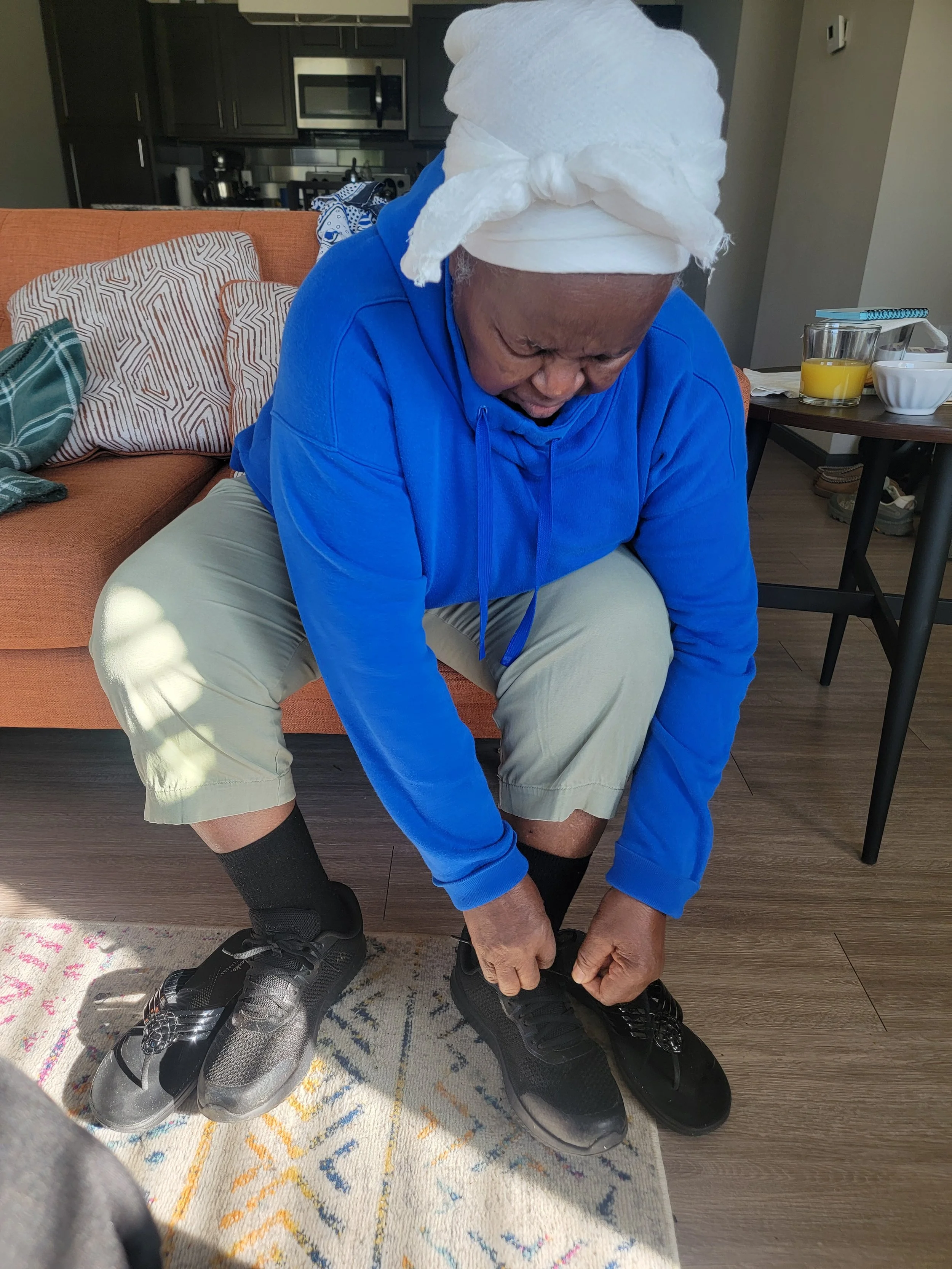
As Africans, knowing where home is matters deeply.
When an African asks, “Where are you from?” the answer is not simply geography. It also tells people where your roots are buried. Ideally, quite literally, where you will one day be buried.
In some cultures, funeral preparations can take months or even more than a year because of all that must be done to properly honor the deceased. Homes are repaired — sometimes entirely new ones are built. Land is prepared. Extended families gather. Food and speeches are planned.
And let’s not forget the flowers.
Death is not treated as an administrative event. It is treated as a homecoming.
I think many immigrants quietly carry this longing inside them — the desire for a place that anchors a family across generations. So while my children are off chasing their dreams, I find myself here in Oklahoma with my 84-year-old mother trying to build something enduring. Somewhere my children can always return to, and something large enough to rouse my mother out of bed each morning — a purposeful, worthwhile challenge.
About a year before my retired father passed away, he told me one early morning:
“There is nothing more terrible than waking up to a day where you have nothing meaningful to do.”
He was a driven, visionary man. Purpose, execution, faith, family, and caring for others were woven into who he was. And I think retirement became a kind of private sorrow for him. I do not want to rob my mother of joy, purpose, and challenge in her sunset years.
My mother — Bibi, the Kiswahili word for grandmother — is brilliant.
In third grade, she raised her hand to attend boarding school. Her father walked her to a bus stop on the slopes of Kilimanjaro, placed her on a bus alone, and sent her into the world. Years later, she became the first valedictorian of her secondary school — something we only learned recently from her former teachers because she never mentioned it herself. Thats how she rolls.
Quiet excellence.
In the 1960s, she earned a full scholarship to attend university in New York. A young Tanzanian woman who had barely traveled outside her region suddenly found herself taking what felt like half the flights on earth — alone. That she made it to New York at all, was huge! Angels clearly worked overtime helping her navigate dozens of airports, hotels, languages and unfamiliar cities.
Moshi.
Tanga.
Dar es Salaam.
Zanzibar.
Mombasa.
Nairobi.
Entebbe.
Kampala.
Addis Ababa.
Cairo.
Tripoli.
Naples.
Amsterdam.
London.
Then finally New York City.
Bibi became an educator, a leader, and alongside my father helped raise four daughters through faith, discipline, chickens, farming, and sheer determination.
But gardening was always her true love language. Any patch of dirt she touched became Eden.
Even in her seventies, Bibi was manually farming ten acres in Tanzania, planting corn and beans alongside day laborers and then sharing the harvest with the community.
Meanwhile, I would proudly show her my tiny Minnesota backyard flower beds. And with the dry humor she is famous for, she would stare at them and say:
“Where?”
Then after a pause:
“Jamani… you are not serious.”
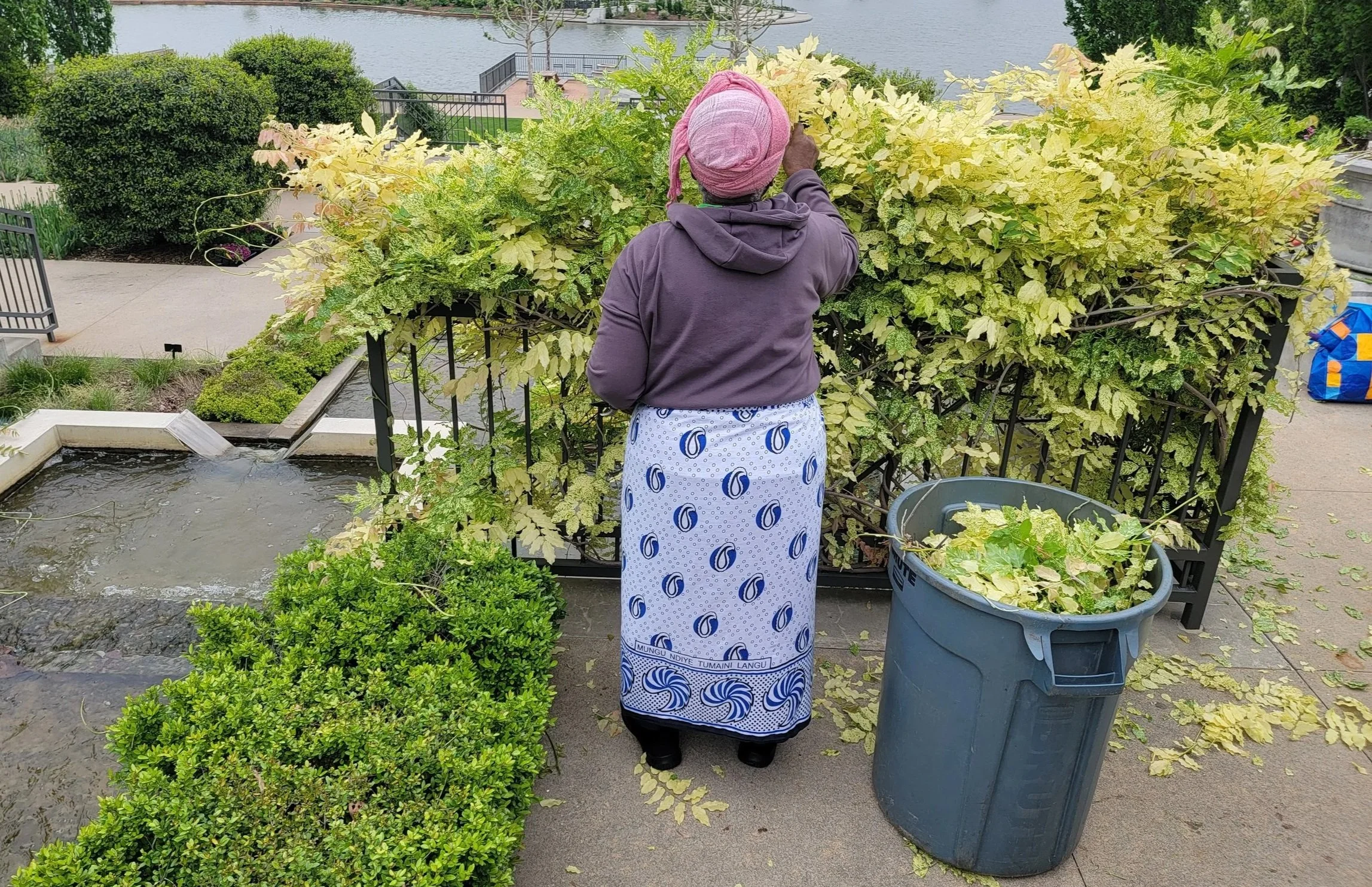
Within days of her quietly pitter-pattering through the garden, everything would transform. The only thing we argued about was pruning. I could hear my plants screaming with pain. But somehow, every time she finished, the garden came back stronger.
Healthier.
More beautiful.
Now as she has aged, I have noticed something: Gardening is still the thing that most animates her spirit. Especially pruning. Small suburban gardens no longer interest her. They pose no challenge worthy of her attention.
So God led us to this farm — a miracle on Highway 51.
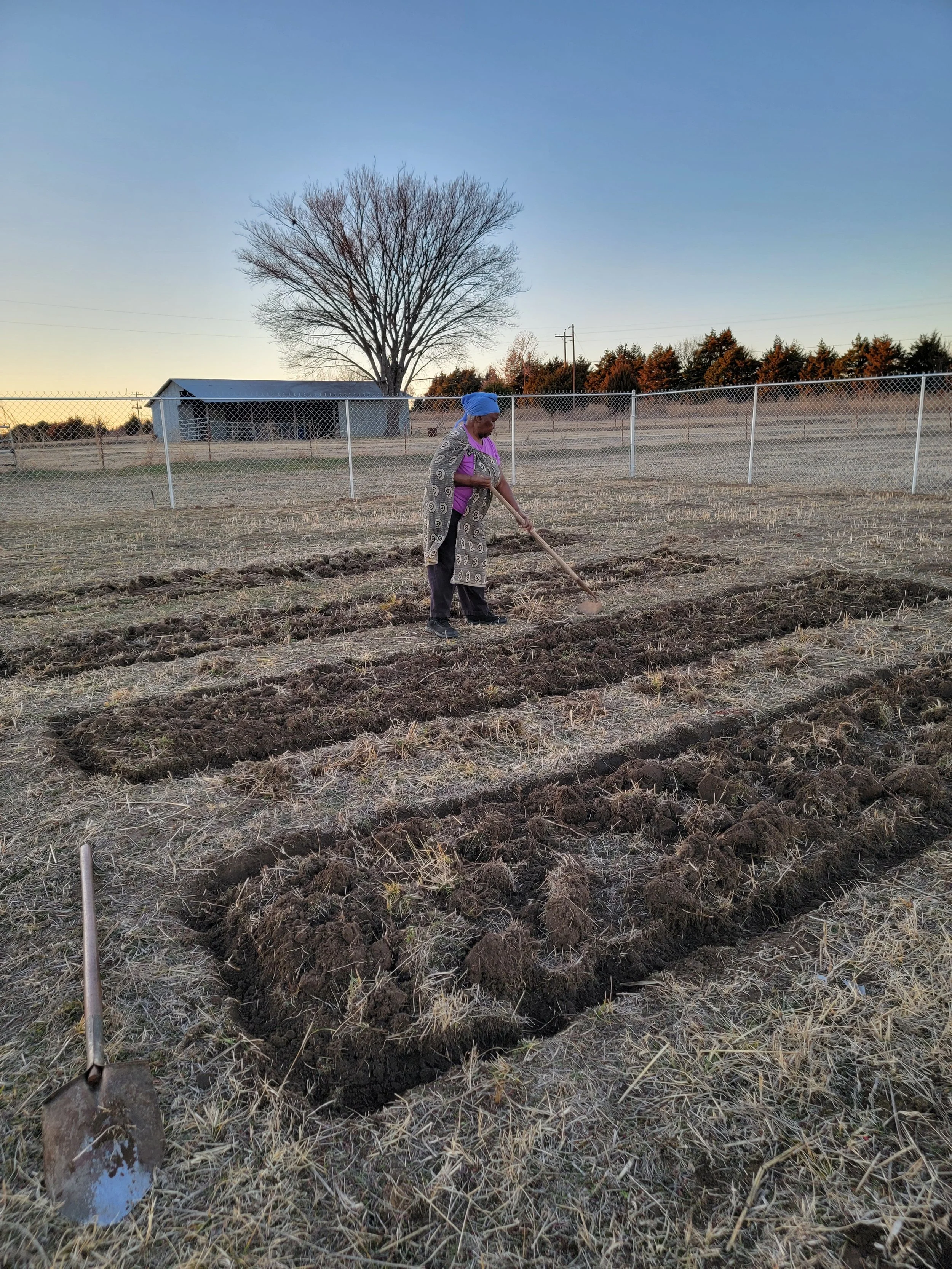
Her new playground. Thirty-eight acres of rich black Oklahoma soil, Bermuda grass, Johnson grass, wind, weeds, mystery animals, and possibility.
Finally, a worthy opponent.
Something big enough to make her get out of bed each morning ready to fight again.
And honestly?
The Bermuda grass may have finally met its match.